

What Should an American Wear to an Indian Wedding? A First-Timer's Plain-English Guide
You Got the Invitation. Now What?
The card is beautiful — gold lettering, maybe a little envelope of turmeric or flower petals tucked inside. You're genuinely excited. And then the mild panic sets in: What am I supposed to wear to this?
"Just wear something colorful" is the advice you'll get from a well-meaning coworker. It's not wrong, exactly, but it's about as helpful as telling someone to "just cook something Indian" for a dinner party. There's a lot of ground between "colorful" and actually feeling put-together, respectful, and comfortable at a multi-event Indian wedding celebration.
This guide is for first-time non-Indian guests who want to do right by their hosts — without overthinking it or spending a fortune.
First: Know Which Event You're Attending
Indian weddings are rarely a single afternoon. A full celebration can span two or three days and several distinct events, each with its own dress code and vibe. The invitation will usually name the event, so look for these:
- Mehendi / Haldi: Daytime, casual, often outdoors. Think festive but relaxed — bright colors, comfortable fabrics.
- Sangeet: An evening of music and dancing. More dressed-up than the Mehendi, but still joyful and expressive. This is where guests go all out on color.
- Wedding ceremony (Shaadi): The main event. Formal, traditional, and the occasion to wear your most polished outfit.
- Reception: Often held the evening of or the day after the ceremony. Cocktail-party level formality — elegant but not as strictly traditional as the ceremony itself.
If you're only invited to one event, great — your decision just got simpler. If you're attending multiple, you may want two outfits, or at least one outfit you can dress up or down with accessories.
The One Rule That Actually Matters
Avoid white and, in many traditions, black — especially for the ceremony. In Indian wedding culture, white is associated with mourning, and turning up in it as a guest is the equivalent of wearing it to a Western funeral. Some modern, cosmopolitan Indian families won't mind at all, but when in doubt, skip it. Every other color is fair game, and bold is genuinely better than muted here.
Red is traditionally the bride's color in many Hindu ceremonies, so some guests avoid it out of deference — though this rule is relaxed in a lot of contemporary weddings. If you're unsure, a quick text to your host asking "any colors I should avoid?" will be appreciated, not seen as odd.
What You Can Actually Wear: Your Real Options
You do not have to wear Indian clothing to an Indian wedding as a non-Indian guest. A well-chosen Western outfit in a rich color absolutely works. But if you want to lean into the occasion — and many guests do, because it's genuinely fun — here's what each garment option actually is.
For Women
Salwar Kameez (or Kurta Set)
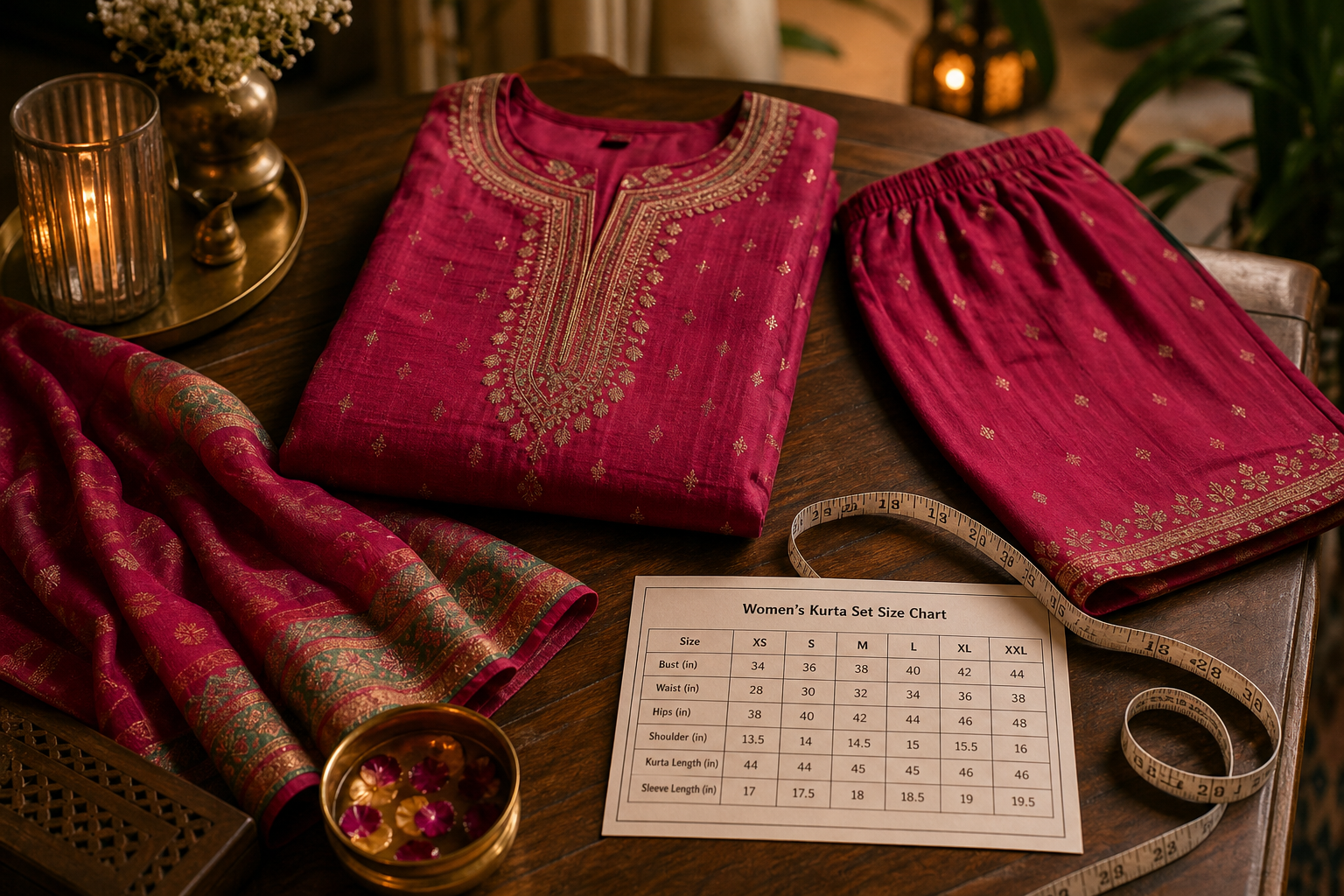
This is the easiest entry point for first-timers. A kurta is a long tunic — it hits anywhere from hip to knee — worn over matching or coordinating pants (salwar or churidar) and often paired with a dupatta (a long scarf draped loosely over the shoulder or across the chest). It's comfortable, it reads as appropriately festive, and it requires zero draping skills. You put it on like a top and trousers. Done.
Anarkali Suit
Imagine a kurta that flares out from the waist like a long skirt — almost a dress silhouette. Anarkalis are dramatic, elegant, and very popular for weddings and sangeet nights. They're also forgiving in fit because the flared skirt doesn't need to be perfectly tailored. If you want to look like you really committed to the occasion, an Anarkali is a strong choice. You can read more about how these silhouettes compare in this breakdown of kurta vs. Anarkali vs. straight-cut styles.
Saree
The saree is the most iconic Indian garment — roughly six yards of unstitched fabric draped in a specific style around the body. It's stunning. It's also the most technically demanding option for a first-timer, because draping it correctly takes practice (or a helpful friend). If you want to wear a saree and have no one to help you drape it, look up tutorials in advance and do a full practice run at home. The first-time saree wearer's checklist covers exactly what to prepare so you're not wrestling with fabric in the venue bathroom.
Lehenga
A lehenga is a long, full skirt worn with a fitted blouse (choli) and a dupatta. It's one of the most popular choices for wedding guests — festive, photogenic, and easier to move in than a saree. For a reception or sangeet, a lehenga in a jewel tone (emerald, cobalt, fuchsia, deep purple) is a completely appropriate and beautiful choice.
For Men
Kurta Pajama
A long kurta — usually collarless or with a small mandarin collar — worn over straight-cut trousers in a matching or complementary fabric. This is the male equivalent of the kurta set: easy, comfortable, and perfectly appropriate for any wedding event. Neutral tones (ivory, beige, light grey) work well for ceremonies; brighter or jewel-toned kurtas suit the sangeet or reception.
Sherwani (for the ceremony or reception)
A sherwani is a longer, more formal coat-style garment, often heavily embroidered. It's what grooms and groomsmen commonly wear. As a guest, you can absolutely wear one to a formal ceremony or reception — it's a high-effort, high-reward choice. If a sherwani feels like too much, a well-fitted kurta pajama in a rich fabric (silk, silk-blend, or brocade) hits the right note without veering into groom territory.
Western Suit with Indian Touches
If Indian menswear feels like a stretch, a well-tailored Western suit in a non-black color — navy, burgundy, forest green — is a respectful and appropriate choice for the ceremony or reception. Some men pair a Western suit with a kurta underneath instead of a dress shirt for a subtle fusion look. It works.
How to Buy Indian Clothing Online Without Guessing on Size
This is where most first-timers get tripped up. Indian sizing does not map directly onto US sizing, and different brands size differently. Here's how to approach it without ordering three things and hoping one fits:
- Take your measurements in inches or centimeters before you do anything else. Chest, waist, hips, and height. Most Indian ethnic wear sites list size charts in these measurements, not S/M/L alone.
- Read the individual product's size chart, not a generic one. A kurta from one brand and a kurta from another can vary by a full size.
- For women's kurta sets and salwar suits, err toward your larger measurement. The kurta is meant to be relaxed-fitting, and a slightly roomy fit looks intentional. A too-small kurta does not.
- For lehengas, the skirt is usually adjustable (drawstring or hook-and-eye waist), so focus your sizing attention on the blouse (choli), which is fitted and less forgiving.
- Order with enough lead time. If you're ordering from a store that ships directly from India, factor in international shipping time. Order at least three to four weeks before the wedding — more if you want to leave room for an exchange.
Small Gestures That Show You Did Your Homework
Wearing Indian clothing (or a respectful Western outfit) is the big move. But a few small things signal to your hosts that you genuinely engaged with the occasion:
- Remove your shoes when asked. Many Hindu ceremonies take place in a mandap (a ceremonial canopy) or a temple, where shoes are removed at the entrance. Look for a pile of shoes near the door — that's your cue.
- Don't sit in the front rows unless invited. The front seating at the ceremony is typically reserved for close family. Hang back until you're directed.
- Accept food and sweets when offered. Declining hospitality at an Indian celebration can read as rude, even if that's not your intention. Take it, taste it, and be enthusiastic.
- If there's a religious ceremony, follow the lead of the guests around you. Stand when others stand, sit when they sit. You don't need to know the rituals — just pay attention.
- Ask before photographing religious rituals. The sangeet and reception are usually fair game. The ceremony itself may have restrictions, especially if a pandit (priest) is officiating.
What to Actually Avoid
Beyond white and (sometimes) black, a few other pitfalls are worth naming:
- Overly casual Western clothing. Jeans, sundresses, and casual tops read as underdressed even at a Mehendi. If in doubt, go more formal, not less.
- Anything too revealing. Indian weddings are family affairs with elders and children present. A low-cut blouse or very short hemline can draw uncomfortable attention. Covered shoulders and a modest neckline are the safer call.
- Uncomfortable shoes you can't walk or dance in. The sangeet and reception involve dancing. If you're wearing heels, make sure you can actually move in them — or bring a pair of flats to change into.
The Bottom Line
You don't need to be an expert in Indian fashion to be a thoughtful guest. Pick a color that isn't white, dress at least as formally as you would for a Western wedding, and if you want to wear Indian clothing — a kurta set, a lehenga, or a saree — go for it. Your hosts will be touched that you made the effort.
India Ethnicity ships a wide range of kurta sets, Anarkali suits, lehengas, and men's kurtas directly from India to addresses across the USA — so you can find something genuine without needing to track down a specialty store. Browse the full collection at India Ethnicity and use the size charts on each product page to order with confidence.
Frequently Asked Questions
Do I have to wear Indian clothing to an Indian wedding as a non-Indian guest?
No, you don't. A well-chosen Western outfit in a rich, non-white color is perfectly appropriate. That said, many non-Indian guests choose to wear Indian clothing because it's a fun way to honor the occasion — and hosts genuinely appreciate the gesture. It's entirely your call.
Is it disrespectful for a non-Indian to wear a saree or kurta?
Not at all — in most cases, it's seen as a compliment. Indian wedding hosts typically love seeing guests embrace the culture. The key is to wear it respectfully and with care, not as a costume. If you're unsure about a specific garment or style, a quick check with the couple or a mutual friend is always welcome.
How much lead time do I need to order Indian clothing online for a wedding in the USA?
If you're ordering from a store that ships directly from India, aim for at least three to four weeks before the event. This gives you buffer for international shipping and, if needed, an exchange for size. Don't leave it to the week before — that's a stressful gamble.
What's the easiest Indian outfit for a first-time non-Indian female guest?
A kurta set (also called a salwar kameez) is the most beginner-friendly option. It goes on like a top and trousers — no draping, no complicated closures. An Anarkali suit is a step up in drama and elegance but just as easy to wear. Both are widely available online and come in styles suited to every event from a casual Mehendi to a formal reception.