

What Is a Ready-to-Wear Saree — and Is It Actually Worth Buying One in the USA?
You've been invited to a Diwali party or a friend's Indian wedding, you want to wear a saree, and there is exactly one problem: nobody in your city knows how to drape one. Your mom is back in India. YouTube tutorials look terrifying. And the event is in three weeks.
This is where the ready-to-wear saree comes up — usually in a WhatsApp group, usually with wildly conflicting opinions. Some people swear by them. Others insist a "real" saree is the only option. The truth, as usual, is more practical than either camp admits.
So What Actually Is a Ready-to-Wear Saree?
A traditional saree is a single unstitched length of fabric — typically around six yards — that is draped around the body in a specific style, then pinned or tucked to hold. The draping itself is an art form, and depending on the regional style (Nivi, Bengali, Gujarati, Maharashtrian), the method changes entirely.
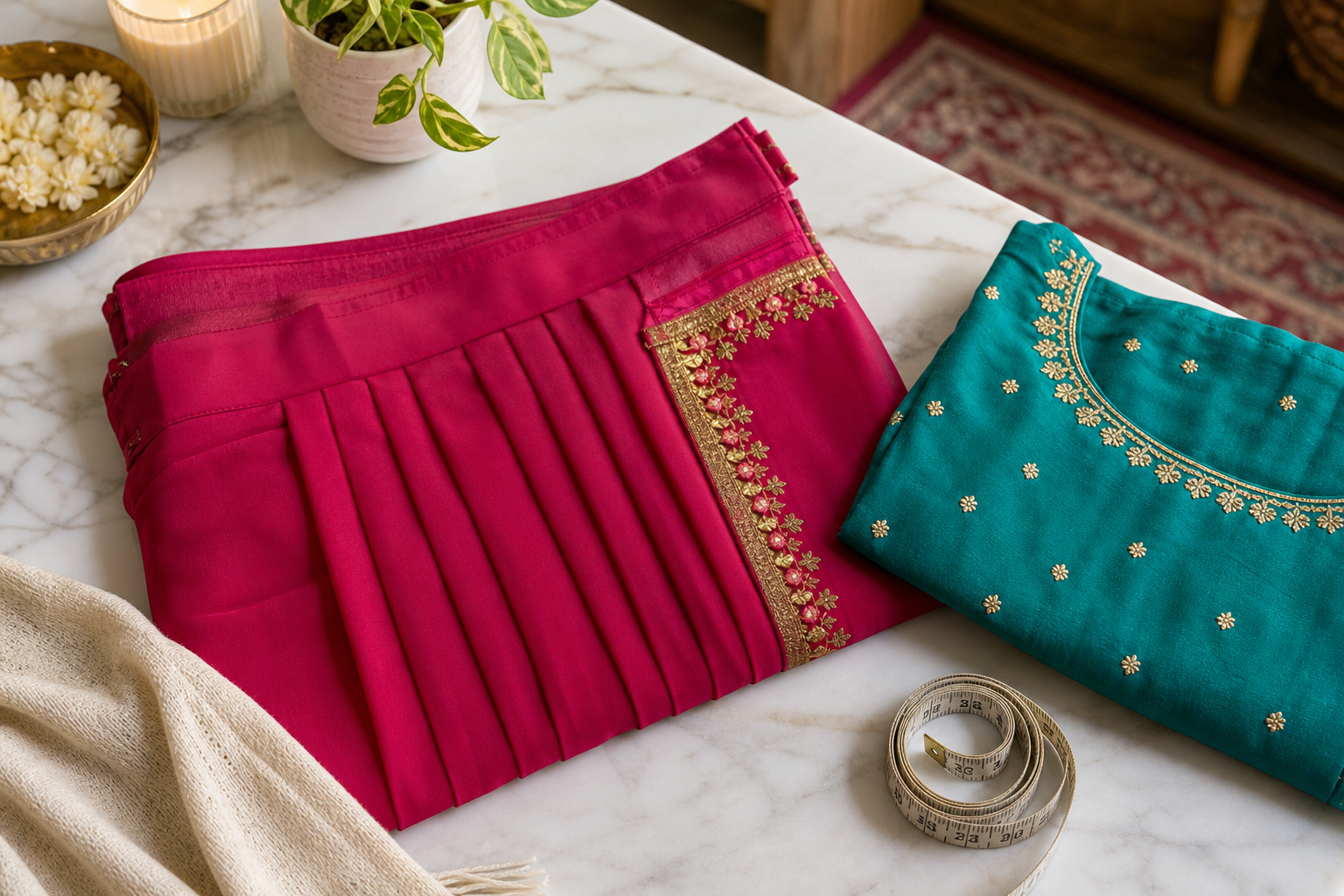
A ready-to-wear saree, sometimes called a pre-draped or pre-stitched saree, skips that process. The fabric is pre-folded, pre-pleated, and stitched into a shape that mimics the finished look of a draped saree. You step into it, fasten it, and you're done — usually in under five minutes. The pallu (the decorative end that drapes over the shoulder) is typically pinned or attached so it stays put all evening.
Some versions come as a two-piece set: a stitched skirt with the pleats built in, and a separate pallu panel that attaches at the shoulder. Others are fully stitched into one piece. The silhouette, when you're wearing it, looks very close to a traditionally draped saree — especially in photos.
What Goes Underneath?
This part trips people up. A traditional saree is worn over a petticoat (a long underskirt, usually in a matching or neutral color) and a blouse. The petticoat is what the saree tucks into at the waist and wraps around.
With a ready-to-wear saree, the petticoat is often built into the stitched skirt — so that part is sorted. What you still need is a blouse. The blouse is the fitted short top that shows at the waist and under the pallu. Most ready-to-wear sarees are sold without one, or with an unstitched blouse piece that needs to be stitched separately.
Before you order, check what's included. If a blouse piece is included but unstitched, you'll need to get it tailored — which is very doable if you have a local Indian tailor, but adds a step. If you're in a city without one, look for sarees sold with a ready-made blouse in your size, or pair the saree with a solid-color fitted top that works aesthetically.
How Does It Actually Compare to a Traditional Drape?
Honestly? The gap is smaller than traditionalists will admit, and bigger than ready-to-wear fans will tell you.
Where it holds up well: The look from the front, especially in photos, is nearly identical. The pleats are crisp and even — often more so than a rushed first-time drape. You can move, sit, dance, and eat without worrying about the whole thing unraveling. For a long evening event, that's not a small thing.
Where it differs: A traditionally draped saree has a fluidity and drape that's hard to replicate in stitched fabric. Connoisseurs will notice. The pallu on a pre-draped version sits in one fixed position — you can't adjust it mid-evening the way you would with a pinned drape. And the fabric choices in ready-to-wear styles tend toward lighter, more structured materials that hold their shape after stitching.
Neither is objectively better. They're different tools for different situations.
Who Should Actually Buy One?
A ready-to-wear saree makes real sense if:
- You have no one nearby who can drape a saree, and you're not confident doing it yourself from a tutorial.
- You're attending an event where you'll be on your feet all evening — a wedding reception, a Diwali party, a cultural show — and you need to move freely without worrying about pins.
- You're new to wearing sarees and want to build comfort with the silhouette before committing to learning the full drape.
- You're buying for a child or a teenager who needs to look put-together without the fuss of a traditional drape.
It's probably not the right call if you're attending a very formal or traditional ceremony where the draping style itself carries cultural significance — a religious ritual, a traditional wedding where the family will notice, or an occasion where you want the full experience of wearing a saree the way it's meant to be worn.
And if you're a confident draper, or you have someone at home who can help, a traditional saree gives you more fabric variety, more styling freedom, and often a more authentic result. The first-time saree wearer's checklist is worth a read if you're on the fence about trying the traditional route.
A Few Things to Check Before You Order
Ready-to-wear sarees are stitched to size, which means sizing matters more than with a traditional saree. Look carefully at the waist measurement for the stitched skirt, and check whether the pallu is fixed or adjustable. Some designs let you re-pin the pallu to your preferred shoulder; others don't.
Also check the return policy before ordering. Because these are stitched garments, some sellers treat them like tailored pieces — final sale. Know that before you buy.
Fabric is worth paying attention to too. Georgette and chiffon drape beautifully and photograph well. Heavier fabrics like brocade or raw silk can feel stiff once stitched into pleats, so if you're going that route, look for reviews or detailed product descriptions before committing.
The Bottom Line
A ready-to-wear saree isn't a shortcut or a compromise — it's a practical solution to a real problem that a lot of diaspora women face. If wearing a saree to your next Indian occasion has felt out of reach because of the draping barrier, this is the version that removes that barrier without making you look like you took the easy way out.
If you're building out your ethnic wardrobe beyond just one occasion, it's also worth thinking about how a saree fits alongside other pieces — the guide on building a small Indian ethnic wardrobe for the whole year covers exactly that.
Browse ready-to-wear and pre-draped saree styles at India Ethnicity — shipped directly from India to your door in the USA.
Frequently Asked Questions
Can I wear a ready-to-wear saree to a traditional Indian wedding?
Yes, for most wedding events — receptions, sangeets, mehendi functions — a ready-to-wear saree is perfectly appropriate. For very traditional religious ceremonies where the draping style itself has cultural or ritual significance, a traditionally draped saree may be more fitting. When in doubt, ask the host family what they'd recommend.
Do I need to buy a blouse separately for a ready-to-wear saree?
Often, yes. Many ready-to-wear sarees include an unstitched blouse piece, which you'll need to get tailored separately. Some come with a ready-made blouse — check the product listing carefully. If you can't get a blouse stitched locally, look for styles that include a finished blouse in your size, or pair the saree with a fitted solid-color top that complements the fabric.
How do I know what size to order for a ready-to-wear saree?
Because the skirt portion is stitched, sizing matters more than with a traditional unstitched saree. Focus on the waist measurement first — that's where fit is most critical. Check the size chart on the product page, and if your measurements fall between sizes, size up rather than down since there's no adjustability built in the way a traditional petticoat has.
Is a ready-to-wear saree good for someone who has never worn a saree before?
It's one of the best starting points, yes. You get the look and feel of a saree without needing to master the draping technique. Many first-timers use a ready-to-wear saree for their first few occasions, then gradually learn traditional draping once they're comfortable with the silhouette and how to move in it.