

Kurta vs. Anarkali vs. Straight Cut: Which Style Actually Works for Your Body and Occasion?
Three Silhouettes, Endless Confusion — Let's Fix That
Walk into any Indian ethnic wear section and you'll see the same three shapes dominating the racks: the clean straight cut, the dramatic Anarkali flare, and the flattering A-line. All three are kurtas. All three are beautiful. But they are not interchangeable, and picking the wrong one for an occasion or body type can leave you feeling underdressed, overdressed, or just uncomfortable.
This guide cuts through the noise. By the end, you'll know exactly which silhouette to reach for — and why.
The Straight Cut Kurta
What It Looks Like
A straight cut kurta falls in a single, vertical line from shoulder to hem with minimal shaping at the waist or hips. The silhouette is clean, structured, and unfussy. Hemlines typically sit anywhere from knee-length to mid-calf.
Best Occasions
- Daily office wear — the structured shape reads as polished without being formal
- Casual outings — easy to throw on with palazzo pants or straight-fit trousers
- Low-key festive gatherings — dress it up with embroidery or a dupatta
Which Body Types It Flatters
Straight cut kurtas work particularly well for lean or rectangular frames because the clean vertical line elongates the silhouette. They also suit petite figures, since there's no extra volume to overwhelm a smaller frame. If you have a fuller figure and still love straight cuts, look for styles with side slits — the opening adds movement and avoids a boxy look.
Fabric Picks
Rayon and cotton are the go-to fabrics for straight kurtas because they drape neatly without adding bulk. Linen works beautifully for daytime and summer wear — it holds its shape and breathes well in warm weather.
A great starting point: the Libas Green Solid Rayon Straight Kurta and the Soch Womens Cream Linen Botanical Print Kurta both demonstrate how the right fabric makes a straight cut feel effortless rather than stiff.
The Anarkali Kurta
What It Looks Like
The Anarkali is the most dramatic of the three. It features a fitted bodice that flares out into a full, floor-grazing or ankle-length skirt — think of it as a kurta that borrows its spirit from a gown. The silhouette is named after the legendary Mughal-era dancer, and it carries that theatrical energy.
Best Occasions
- Weddings and receptions — the volume and length read as celebratory and formal
- Eid, Diwali, and other major festivals — Anarkalis in rich fabrics photograph beautifully
- Sangeet and mehndi nights — the flared skirt moves wonderfully when you dance
- Formal parties — a georgette Anarkali with embellishment rivals any cocktail dress
Which Body Types It Flatters
The fitted-top-flared-bottom structure makes the Anarkali universally flattering, but it shines on pear-shaped and fuller figures. The cinched bodice defines the waist while the flare skims over hips and thighs. For petite frames, choose an Anarkali that hits just below the knee rather than floor-length — it avoids drowning the silhouette.
Fabric Picks
Georgette is the classic choice for Anarkalis because it flows and catches light beautifully. The Fashion Basket Black Georgette Anarkali Kurta Set is a good example of how the fabric elevates the silhouette into something occasion-ready. For lighter events, cotton or chanderi Anarkalis offer the same shape with a more relaxed feel.
The A-Line Kurta
What It Looks Like
The A-line sits between the straight cut and the full Anarkali flare. It's fitted at the shoulders and bust, then gently widens toward the hem — creating a subtle triangular shape. The flare is modest, not dramatic, and hemlines usually fall at the knee or slightly below.
Best Occasions
- Family functions and puja ceremonies — dressy enough without being over-the-top
- Casual festive wear — pairs well with churidars, leggings, or palazzos
- Brunch and daytime events — the relaxed flare is comfortable for long hours
- College and work — especially in solid colors or subtle prints
Which Body Types It Flatters
The A-line is genuinely one of the most versatile silhouettes for women because the gentle flare works across body types. It adds curves to straight frames, skims over the hip area for pear shapes, and creates a defined waist without cinching. If you're unsure which silhouette to default to, the A-line is a safe, flattering choice.
Fabric Picks
Cotton is the most popular choice for A-line kurtas — it holds the gentle flare without going limp. The Greciilooks Womens Cotton A-Line Regular Fit Kurta Set shows how a well-cut cotton A-line can look put-together for everyday wear. Georgette and rayon also work well when you want the style to feel a little more special.
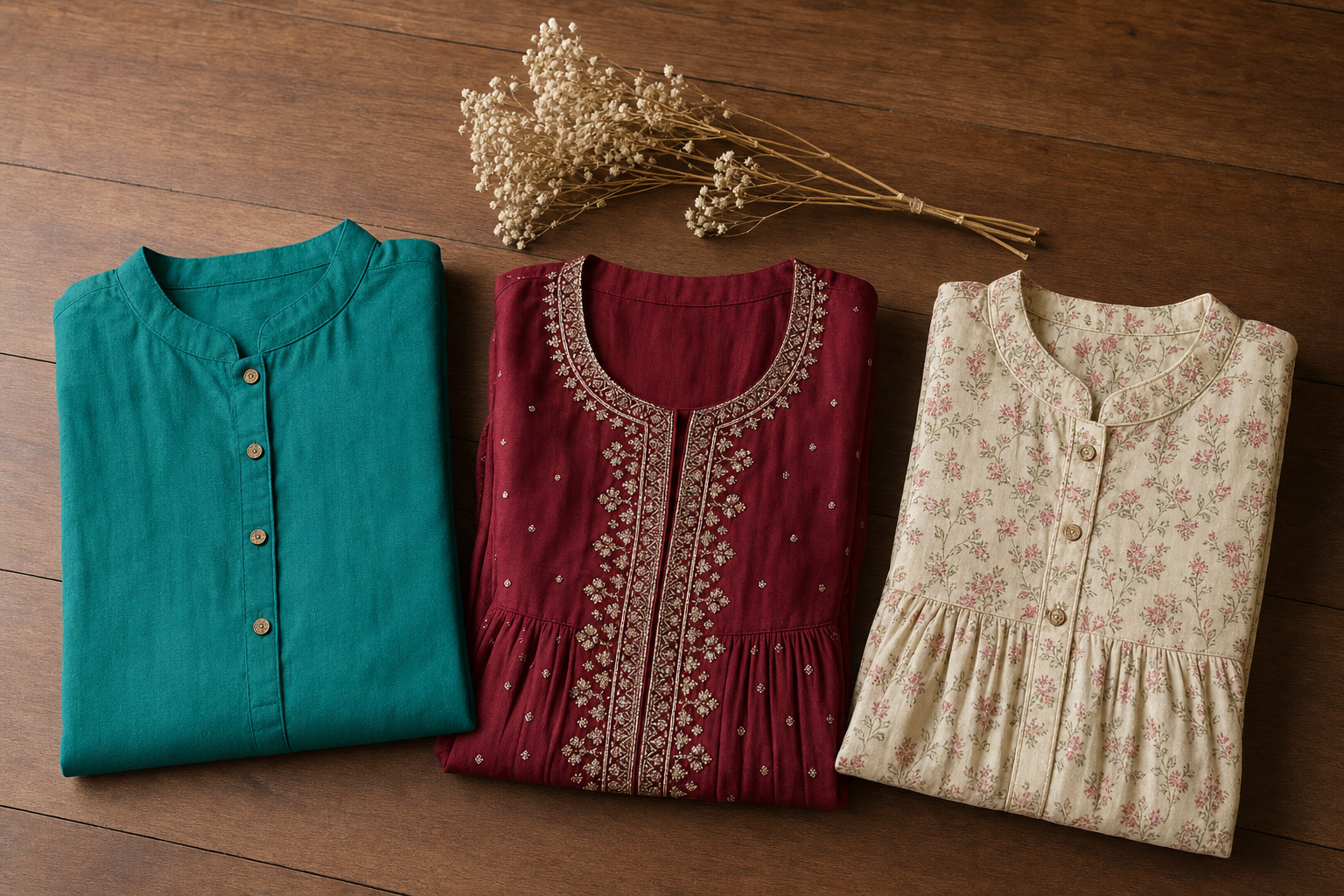
Quick Comparison: Which Kurta for Which Situation?
- Office, daily wear: Straight cut in rayon or linen
- Wedding guest: Anarkali in georgette or silk blend
- Festival at home: A-line in cotton or chanderi
- Sangeet / dance event: Anarkali — the flare moves with you
- Unsure / first-time buyer: A-line — works for almost every occasion
- Petite frame: Straight cut or knee-length A-line
- Fuller figure: Anarkali or A-line — both define the waist
- Tall frame: All three work; floor-length Anarkali looks especially striking
A Note on Embellishments and Necklines
The silhouette is the foundation, but the details determine the occasion. A straight kurta with gota lace embellishment — like the Violet Straight Kurta with Gota Lace Embellishment — crosses from casual into festive territory without changing the base shape. Deep V-necks and heavy embroidery push any silhouette toward formal; simple round necks and minimal prints keep it casual.
If you want to go deeper on how to style these silhouettes with dupattas and bottoms, the complete guide to kurta sets and dupattas covers pairing in detail. And for a broader look at how Indian ethnic fashion is evolving, the post on ethnic wear trends for 2024–2025 is worth a read.
How to Buy the Right Size When Shopping Online
Silhouette choice means nothing if the fit is off. A few practical tips for ordering Indian ethnic wear from abroad:
- Measure your bust, waist, and hip — don't rely on your Western clothing size, as Indian sizing runs differently.
- Check the size chart for each brand — sizing varies between labels even within the same store.
- For Anarkalis, prioritize bodice fit — the flared skirt is forgiving, but a tight bodice is uncomfortable and hard to alter.
- For straight kurtas, check the shoulder measurement — a dropped shoulder on a straight cut looks sloppy; a clean shoulder line is everything.
If you want more guidance on selecting kurta sets specifically, the ultimate guide to styling and selecting kurta sets for women goes into greater detail on fit and fabric choices.
Ready to Find Your Silhouette?
Whether you're drawn to the clean lines of a straight kurta, the celebratory volume of an Anarkali, or the everyday ease of an A-line, India Ethnicity carries all three — sourced directly from India and shipped to your door. Browse kurtas and ethnic tops for women at India Ethnicity and find the silhouette that works for your body, your occasion, and your wardrobe.
Frequently Asked Questions
What is the difference between an Anarkali and a straight kurta?
A straight kurta falls in a single vertical line from shoulder to hem with little to no flare. An Anarkali has a fitted bodice that opens into a wide, dramatic flare toward the hem — usually ankle or floor length. The Anarkali is more formal and occasion-specific, while the straight cut is better suited to everyday and office wear.
Which kurta style is best for a wedding or festive event?
An Anarkali kurta in a rich fabric like georgette or silk blend is the most appropriate choice for weddings, receptions, and major festivals. The full flare and longer hemline give it a formal, celebratory feel. A heavily embellished straight or A-line kurta can also work for semi-formal festive occasions.
Which kurta silhouette is most flattering for plus-size or fuller figures?
Both the Anarkali and the A-line tend to be the most flattering for fuller figures. The Anarkali's fitted bodice defines the waist while the flare skims the hips and thighs. The A-line offers a similar effect with a subtler, more relaxed flare that works across a wide range of body types.
Can I wear an A-line kurta to the office?
Yes — an A-line kurta in a solid color or subtle print, paired with straight-fit trousers or churidars, is a polished and comfortable choice for office wear. Stick to cotton or rayon fabrics and avoid heavy embellishments to keep the look professional.