

Indian Ethnic Wear for Boys: How to Dress Your Son for Diwali, Eid, or a Wedding Without a Meltdown
The outfit looks perfect. Your son disagrees.
You've ordered the sherwani, pressed it, laid it out the night before — and the moment your seven-year-old sees it, the negotiation begins. It itches. It's too tight. He can't run in it. And now you're twenty minutes from leaving for the wedding.
This is the reality most diaspora parents don't talk about when it comes to dressing boys in Indian ethnic wear. The girls' side of the wardrobe gets all the attention — lehengas, salwar sets, matching dupattas — while boys get whatever's left on the shelf, ordered in a rush, usually in the wrong size. Then everyone wonders why he spent the reception tugging at his collar.
This guide is for parents who want to do it differently: pick the right garment for the right occasion, get sizing right when ordering from India, and actually have a kid who's comfortable enough to sit through a puja or smile in a wedding photo.
Start With the Occasion, Not the Outfit
The single biggest mistake is buying the most elaborate thing available and hoping it works everywhere. It won't. A heavily embroidered sherwani set that looks stunning at a wedding reception is miserable for a three-hour Diwali puja at home where your son is sitting cross-legged on the floor, getting up for aarti, and then immediately running to play with his cousins.
Think of boys' ethnic wear in two broad tiers:
- Relaxed occasion wear — Diwali at home, Eid family gatherings, casual temple visits, small pujas. Here, comfort is everything. A well-fitted kurta with straight-cut pants or a simple kurta-pyjama set is the right call. The fabric does most of the work: cotton and soft cotton blends breathe, don't scratch, and survive a child's energy levels.
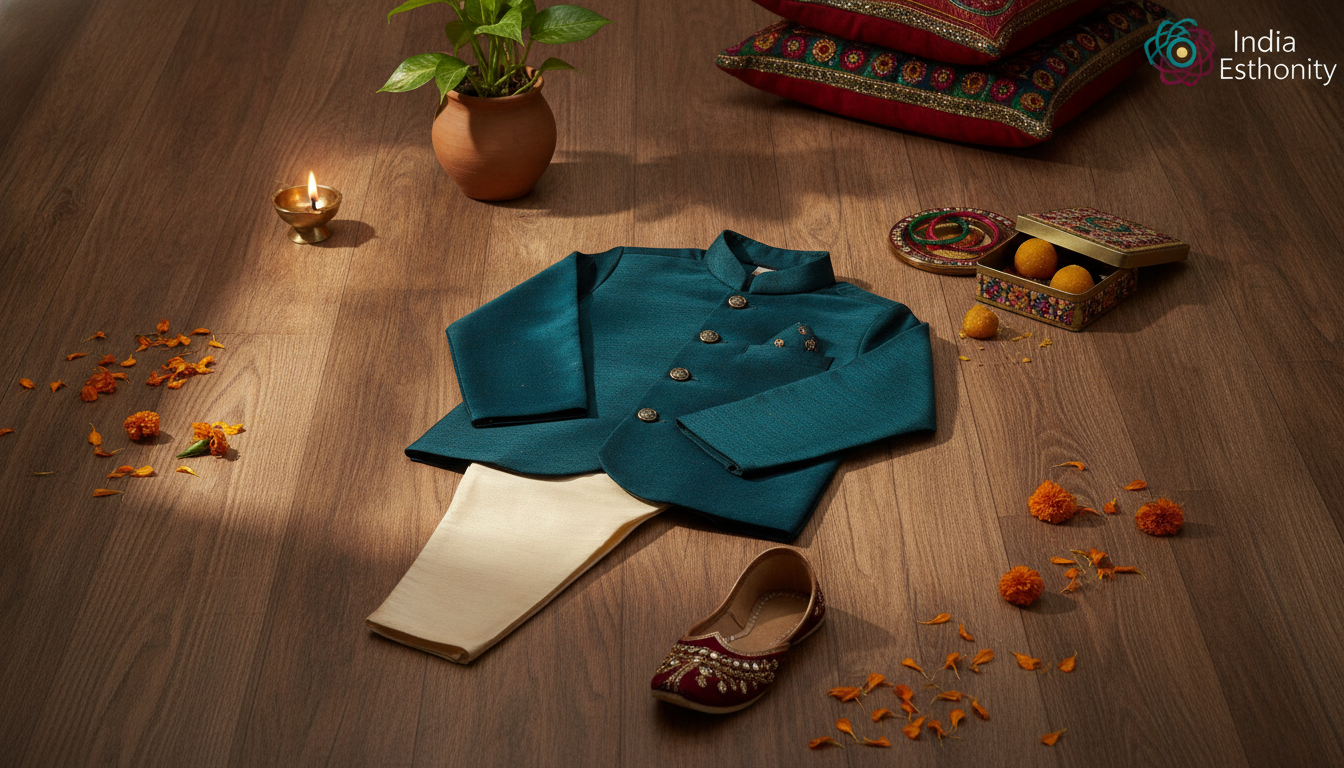
- Formal occasion wear — weddings, baraat processions, formal receptions, naming ceremonies. This is where you can go a little richer: a kurta with a Nehru jacket, or a more structured kurta set with subtle embroidery. Still not a full sherwani for most kids under ten, unless they're in the wedding party and will be seated or carried for most of it.
Decide the tier first. Then pick the garment.
Which Garments Actually Work for Active Boys
The Kurta-Pyjama Set
This is the workhorse of boys' ethnic wear and, honestly, the one you should reach for most often. A straight-cut kurta with a matching pyjama (the traditional drawstring trouser, not the Western sleepwear version) is comfortable, looks put-together, and works across a wide range of occasions. The drawstring waist means no sizing drama at the waistband — a genuine relief when ordering from India without being able to try things on first.
For fabric, prioritize cotton or rayon for younger boys. Both fabrics are soft against skin, don't trap heat, and hold up through an evening of running around. Avoid stiff brocades or heavy silk blends for any child who's going to be active — they restrict movement and get uncomfortable fast.
Kurta with Churidar or Straight Pants
A step up in formality from the pyjama set. Churidars (the fitted trouser gathered at the ankle) look sharp and photograph beautifully, but they do restrict movement more than a straight pyjama. Fine for a wedding where your son will be sitting through a ceremony; less ideal for a Diwali evening where he'll be sprinting between rooms. Straight-cut ethnic pants split the difference well.
The Nehru Jacket Over a Kurta
If you want a formal look without the full sherwani commitment, a Nehru jacket layered over a plain or lightly printed kurta is the smartest move. The jacket can come off the moment the formal part of the evening ends, and suddenly you have a kid in a comfortable kurta who's much happier about the whole thing. It also photographs like a complete outfit even without the jacket — two looks, one purchase.
Full Sherwani Sets
Best reserved for boys who are part of the wedding party itself — ring bearers, brothers of the groom, or when the family photo requires everyone in matching formal wear. Sherwanis are structured, often heavier, and built for standing still and looking magnificent. Most boys under eight or nine find them genuinely uncomfortable for anything longer than an hour. If you go this route, make sure the fit is exactly right — there's very little forgiveness in a structured sherwani when the sizing is even slightly off.
The Sizing Problem (and How to Actually Solve It)
This is where most international orders go wrong. Indian children's sizing is typically labeled by age (2Y, 4Y, 6Y, 8Y, etc.), but Indian kids and American kids are often built differently — and those age labels can run small compared to what your son actually wears in the US.
Here's the practical approach:
- Measure, don't guess by age. Take your son's chest, waist, and height measurements in inches or centimeters before you order anything. Most Indian ethnic wear listings include a size chart — use it. The age label is a rough guide at best.
- Size up for comfort. Ethnic wear is meant to have a relaxed, slightly generous fit — it's not tailored the way Western formalwear is. If your son is between sizes, go up. A kurta that's slightly long can be worn as-is or hemmed; one that's too tight across the shoulders is unwearable.
- Pay attention to chest and shoulder measurements above all else. Kurtas can be belted or worn loose if the length is off, but a tight chest or pulled shoulder seam can't be fixed without a tailor.
- Order earlier than you think you need to. If the occasion is eight weeks away, order now. Shipping from India takes time, and you want a buffer for any sizing issues. Last-minute ethnic wear orders are how families end up at the wedding in whatever was available at the local Indian grocery store.
If you're shopping for multiple kids for the same event, consider ordering one size up as a backup for the youngest — the gap between sizes is smaller for smaller children, and having an alternate ready has saved more than a few Diwali evenings.
Occasion-by-Occasion Breakdown
Diwali Puja at Home
Go comfortable and festive. A bright kurta in orange, yellow, red, or gold with a matching or contrasting pyjama is perfect. Cotton or rayon, relaxed fit, nothing that needs to stay tucked in. If your son is helping light diyas or sitting through a longer puja, he'll be on the floor — churidars and stiff fabrics are a bad idea here. Think of this as the occasion where the outfit should feel like a celebration, not a constraint.
Eid Family Gathering
A clean, well-fitted kurta in white, ivory, or pastel shades is traditional and appropriate. Subtle embroidery at the collar or cuffs adds a festive touch without being over the top. Again, a kurta-pyjama set is the most practical choice. If the gathering is at a mosque, make sure the fit is modest and the fabric isn't see-through — white cotton can be sheer in certain weights.
Indian Wedding as a Guest
A kurta with a Nehru jacket is your best friend here. Choose richer colors — navy, burgundy, emerald, deep gold — and look for subtle embroidery or jacquard weave on the jacket for texture. Pair with straight ethnic pants or churidars depending on how formal the wedding is. This combination looks genuinely polished in photos and still lets a boy move around during the reception without misery.
Wedding Party (Ring Bearer, Close Family)
This is the one occasion where a sherwani set makes sense. Coordinate with the wedding family on color palette early — you don't want to be the one in burgundy when everyone else is in gold. Order well in advance, size carefully, and if possible, have a local tailor on standby for minor adjustments after the package arrives.
One More Thing: Get Your Son Involved
If your son is old enough to have an opinion (and most boys are, loudly), show him the options before you order. Let him pick the color. Ask if he wants the jacket or not. When a kid has some ownership over what he's wearing, the morning-of resistance drops dramatically. This isn't about indulging every preference — it's about avoiding the negotiation that happens when an outfit is simply imposed on him at 6 a.m. on the day of the event.
The goal is a boy who walks into that wedding or Diwali gathering feeling good, not one who's been wrestled into something he hates and will spend the evening trying to escape.
Browse boys' kurtas and ethnic sets at India Ethnicity — shipped directly from India to your door, with a wide range of styles for every occasion from casual pujas to formal weddings. And if you're dressing the whole family, our guide on dressing kids for Indian occasions and matching family Indian wear are worth a read before you checkout.
Frequently Asked Questions
What is the most comfortable Indian ethnic outfit for a young boy?
A cotton or rayon kurta-pyjama set is generally the most comfortable option for younger boys. The drawstring waist accommodates different body shapes, the fabric breathes well, and the relaxed fit allows full movement — important for kids who won't stay still through a long event.
How do I get the sizing right when ordering boys' ethnic wear from India?
Always measure your son's chest, waist, and height before ordering — don't rely on age labels alone, as Indian sizing can run smaller than US children's sizing. When in doubt, size up: ethnic wear is designed with a relaxed fit, and a slightly generous kurta looks intentional, while one that's too tight across the shoulders is unwearable.
Is a sherwani appropriate for a boy attending a wedding as a guest?
A full sherwani is best reserved for boys who are part of the wedding party itself. For a guest, a kurta paired with a Nehru jacket is a smarter choice — it looks formal and photographs beautifully, but it's far more comfortable for a child who'll be active through a long evening. The jacket can also come off once the formal ceremony is over.
How far in advance should I order boys' Indian ethnic wear when living in the USA?
Order at least six to eight weeks before the event if you can. Shipping from India takes time, and you want enough of a buffer to deal with any sizing issues without panicking. Last-minute orders are the most common reason families end up with the wrong fit or a rushed compromise — give yourself room to sort it out calmly.