

Indian Bridal Lehenga in the USA: How to Set a Realistic Budget, Order on Time, and Actually Receive It Before the Wedding
The wedding date is set. The venue is booked. And somewhere between finalizing the guest list and choosing the menu, you realize you still don't have a lehenga — and you're sitting in the USA, not Delhi.
Buying a bridal lehenga from abroad is genuinely different from every other clothing purchase you've made online. The stakes are higher, the lead times are longer, and the gap between a product photo and what arrives at your door can be significant if you don't know what to look for. This guide is for anyone navigating that process without a family member who can walk into a Chandni Chowk store and check the fabric in person.
Start With the Timeline — Everything Else Flows From Here
The single most common mistake brides make when ordering from India is underestimating how long the process actually takes. A bridal lehenga isn't a kurta you can swap out if the sizing is slightly off. It's a layered garment — lehenga skirt, blouse (choli), and dupatta — often with embroidery, heavy embellishments, or custom work that takes time to produce before it even ships.
Here's a realistic picture of the timeline you're working with:
- Ready-to-ship pieces: These exist, and they're your safest bet if you're ordering within six to eight weeks of the wedding. They ship as-is, so what you see in the listing is what's in stock.
- Made-to-order or semi-custom pieces: These typically need several weeks of production time on top of shipping. If a listing mentions customization, embroidery finishing, or blouse stitching, factor in that production window before the item even leaves India.
- International shipping from India to the USA: Standard shipping can take anywhere from two to four weeks depending on the courier, customs clearance, and the time of year. Express options are faster but add cost. During peak wedding season — roughly October through February, and again around April and May — shipping volumes increase and delays become more likely.
The honest rule of thumb: if your wedding is three months away, you're not too early. If it's six weeks away and you haven't ordered, ready-to-ship is the only safe option.
What a Bridal Lehenga Listing Is Actually Telling You
Reading an online lehenga listing well is a skill. Here's what to pay attention to, and what to treat with some skepticism.
Fabric
The fabric name tells you a lot about how the lehenga will look, move, and feel. Velvet and raw silk give you structure and a rich, matte finish — ideal for winter weddings and heavy embroidery. Georgette and net are lighter and more fluid, which works well for summer or outdoor ceremonies. Satin has a shine that photographs beautifully but can feel less breathable. If a listing just says "premium fabric" without specifying the material, that's worth questioning before you order.
Embellishments
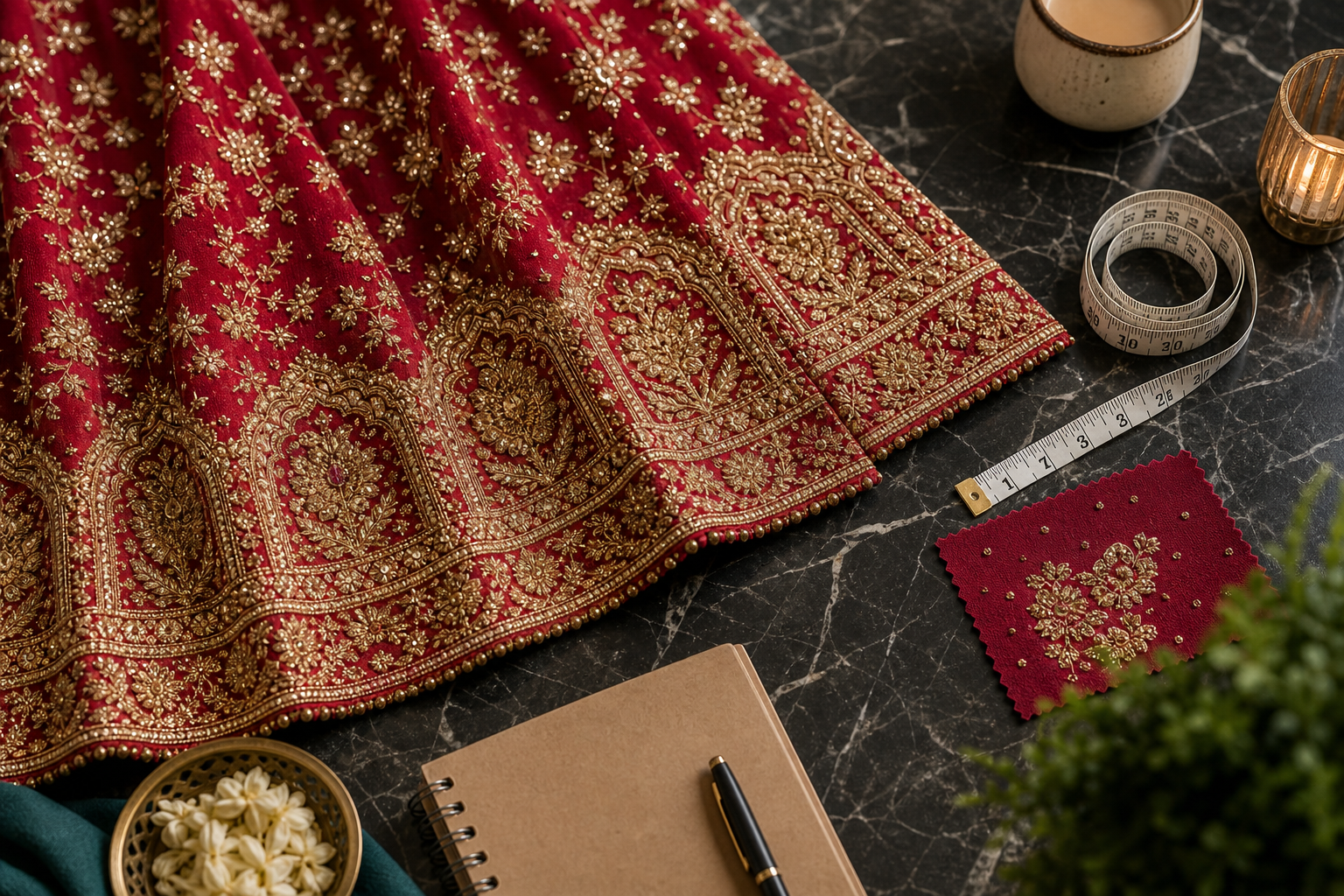
Look for specific terms: zari (metallic thread weaving), zardozi (raised metallic embroidery), sequins, mirror work, stone work, or gota patti (ribbon appliqué). The more specific the listing, the more confidence you can have in what you're getting. Vague terms like "heavy work" or "designer embroidery" without detail are a flag — ask the seller for clarification or look for close-up photos of the embroidery rather than just the full-length product shot.
Blouse (Choli) Details
This is where many buyers get caught off guard. Some listings include a stitched blouse, some include unstitched fabric, and some don't include a blouse at all. Read this carefully. An unstitched blouse means you'll need to find a local tailor in the USA to stitch it to your measurements — which is doable, but adds time and cost. A pre-stitched blouse in a standard size may need alterations. Know what you're getting before you order.
Color
Screen colors vary. A "bridal red" in one listing might read as deep crimson on your monitor and arrive as a brighter scarlet. If the exact shade matters — and for a wedding lehenga, it usually does — look for listings with multiple photos taken in different lighting, or reach out to ask if the seller can share additional images.
Setting a Realistic Budget
Here's the honest version: bridal lehengas have a very wide price range, and the difference between price points is usually visible in the fabric quality and the embellishment density. A piece at the lower end of the market will typically have lighter embellishment, simpler fabric, and less intricate finishing. That doesn't mean it won't be beautiful — it means you should look at it for what it is, not expect it to look like a designer showroom piece.
What moves the price up:
- Heavier, denser embroidery (more labor hours)
- Better base fabric (raw silk vs. synthetic, velvet vs. polyester velvet)
- Fully stitched and fitted blouse included
- Three-piece set with a well-finished dupatta
- Brand name or designer label
What to avoid at any budget: don't stretch into a price range where you're ordering something you haven't seen clearly photographed, from a seller with limited reviews, with a tight delivery window. A mid-range lehenga you receive on time is infinitely better than a high-end one that arrives the day after the wedding.
If budget is a real constraint, consider whether the wedding lehenga needs to be the most expensive piece in the outfit — sometimes the dupatta draping, jewelry, and makeup do as much visual work as the lehenga itself. A well-chosen mid-range piece styled carefully can photograph beautifully.
Sizing: The Part Everyone Gets Wrong
Indian bridal lehenga sizing is not the same as US sizing. The lehenga skirt is usually adjustable at the waist (drawstring or hook), which gives some flexibility — but the blouse is where fit problems actually happen. Blouse sizing in Indian ethnic wear runs on a chest measurement system, and the difference between a well-fitting blouse and an ill-fitting one is the difference between feeling confident and spending the wedding day tugging at your outfit.
Take your measurements in inches or centimeters before you order: bust, waist, hip, and the length from your shoulder to your natural waist. Compare them against the size chart in the listing — not against your usual US dress size. If you're between sizes, size up for the blouse and plan on minor alterations locally. Most US cities with an Indian community have tailors experienced with ethnic wear alterations.
If you're navigating the broader question of building out your ethnic wardrobe beyond just the bridal outfit, this guide on building a small Indian ethnic wardrobe for every occasion covers the foundation pieces worth investing in.
What to Do If Something Goes Wrong
Even with careful planning, things can go sideways — a delayed shipment, a color that doesn't match, a blouse that doesn't fit. Have a contingency plan before you order, not after.
If you're ordering with a tight timeline, identify a local Indian clothing store or tailor who could help with emergency alterations or a backup dupatta. Know the return and exchange policy of the store you're ordering from before you place the order, not after it arrives. And if the lehenga arrives with a fit issue that's fixable — a slightly long hem, a blouse that needs taking in — a good tailor can usually solve it within a few days.
For brides weighing whether to rent or buy the bridal outfit entirely, the rent vs. buy guide for Indian wedding outfits in the USA breaks down exactly when each option makes more sense.
The Bottom Line
A bridal lehenga ordered from the USA to India is absolutely doable — thousands of brides do it every wedding season. The ones who have a good experience are the ones who started early, read listings carefully, took their measurements seriously, and had a clear-eyed budget. The ones who don't are the ones who ordered six weeks out and hoped for the best.
Give yourself the time and the information. The lehenga you want is out there — you just need to order it before the panic sets in.
Explore India Ethnicity's lehenga and bridal wear collection — sourced directly from India and delivered to you in the USA, with a range that covers traditional bridal reds, contemporary pastels, and everything in between.
Frequently Asked Questions
How far in advance should I order a bridal lehenga from India to the USA?
For ready-to-ship pieces, six to eight weeks before the wedding is a reasonable minimum — this accounts for shipping time and any minor alterations you might need locally. If you're looking at made-to-order or semi-custom pieces that require embroidery finishing or blouse stitching, three to four months is a safer window. During peak Indian wedding season, add extra buffer for shipping delays.
Will my US size translate to Indian bridal lehenga sizing?
Not directly. Indian ethnic wear sizing is based on body measurements in inches or centimeters — bust, waist, and hip — rather than US dress sizes. Always measure yourself and compare against the specific listing's size chart. The lehenga skirt is usually adjustable, but the blouse (choli) fit is where you need to be precise. When in doubt, size up on the blouse and plan for local alterations.
What's the difference between a ready-to-ship lehenga and a made-to-order one?
A ready-to-ship lehenga is already produced and in stock — it ships quickly and what you see in the listing is what you'll receive. A made-to-order piece is produced after you place the order, which can mean better customization (blouse sizing, color variations) but adds production time before it even ships. Always check which type a listing is before ordering, especially if you're working with a tight timeline.
Does a bridal lehenga listing always include the blouse and dupatta?
Not always — this varies by listing. Some are sold as a complete three-piece set (lehenga skirt, blouse, dupatta), some include unstitched blouse fabric rather than a stitched blouse, and some are skirt-only. Read the listing description carefully and look for this detail explicitly. If it's unclear, contact the seller before ordering. An unstitched blouse means you'll need to find a local tailor to stitch it to your measurements, which adds time and cost to factor in.