

How to Build a Small Indian Ethnic Wardrobe That Covers Every Occasion for a Year
The One-Outfit-Per-Event Trap
You buy a lehenga for a cousin's wedding in June. Then Diwali comes around and it feels too formal, so you buy something new. A puja at a friend's place — something casual this time. By the end of the year, you have six Indian outfits and somehow nothing to wear.
This is the most common wardrobe mistake among Indian diaspora shoppers, and it's completely understandable. When you're not surrounded by Indian clothing stores, every purchase feels like a one-time event decision rather than part of a bigger wardrobe. The fix isn't buying more — it's buying smarter.
Here's a framework for building a small, genuinely versatile Indian ethnic wardrobe: four to six pieces that cover the full range of occasions you'll actually face in a year, from festive to formal to laid-back.
Start by Mapping Your Actual Occasions
Before you buy anything, write down the events you realistically attend each year. For most diaspora households in the US, the list looks something like this:
- One or two big festivals (Diwali, Navratri, Eid, Holi)
- One or two weddings or receptions — either here or back in India
- Smaller pujas, pooja gatherings, or cultural events at the mandir or community center
- Casual Indian dinners or get-togethers at home
That's four distinct registers: festive-formal, wedding-level dressy, semi-formal, and relaxed. The goal is to cover all four without a dedicated outfit for each one.
The Core Four (and When to Add a Fifth or Sixth)
1. One Solid, Rich-Toned Kurta Set
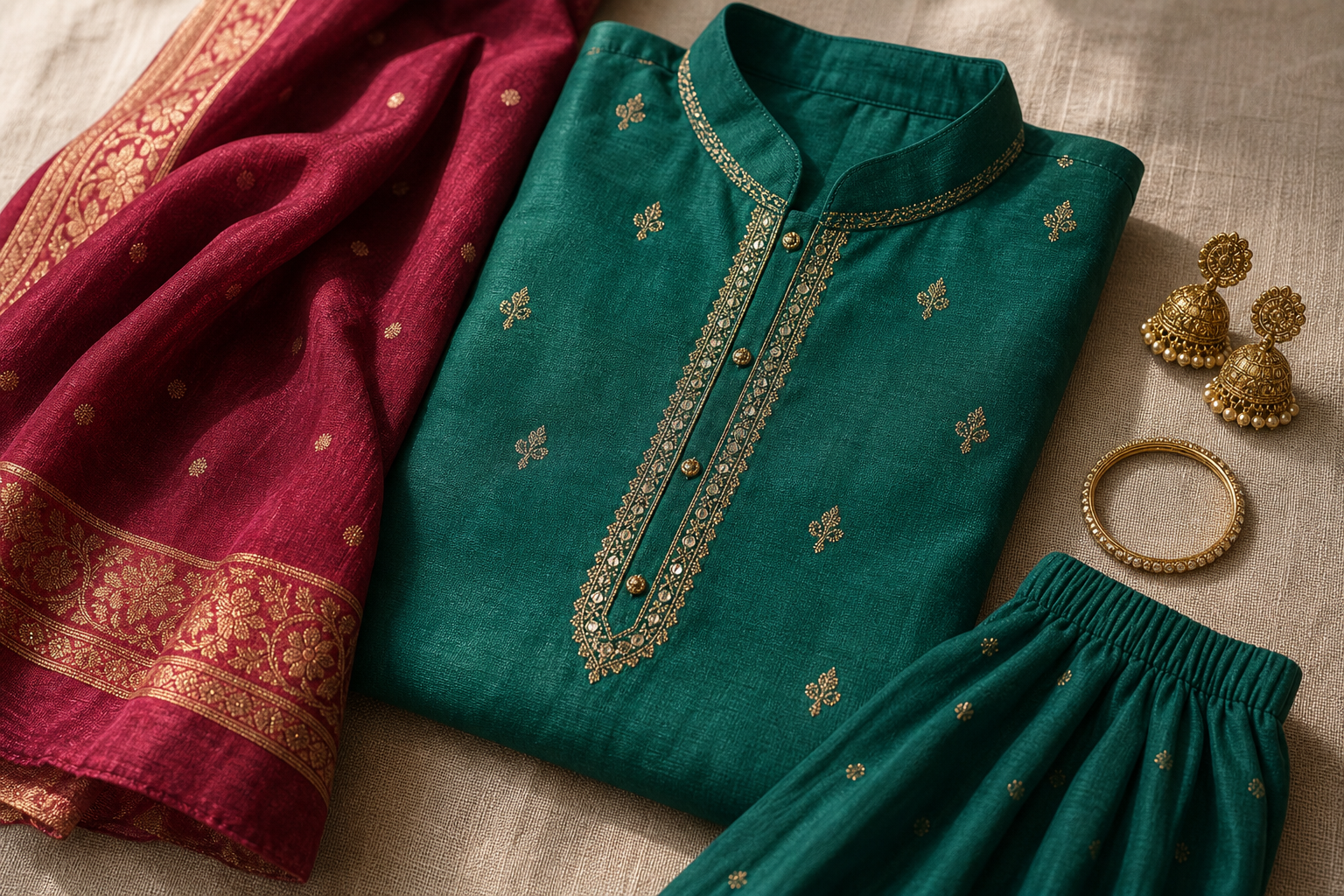
This is your workhorse. A well-fitted kurta set — kurta, bottom, and dupatta — in a deep or jewel tone (think forest green, burgundy, royal blue) does more heavy lifting than anything else in the wardrobe. Wear it as a set for Diwali or a semi-formal puja. Separate the kurta and pair it with plain trousers for a casual dinner. Change the dupatta styling for a slightly different look at the next occasion.
Fabric matters here. Cotton and linen blends work for warmer months and travel well. Georgette or rayon drapes more formally and photographs beautifully — useful if you're attending events where pictures matter.
If you're choosing just one piece first, make it this one. Browse this guide to versatile kurta sets to understand what to look for in fabric, silhouette, and styling range before you buy.
2. A Solid or Subtly Printed Straight Kurta
This is your casual-to-smart-casual layer. A straight kurta in a neutral or muted tone — cream, sage, dusty rose — pairs with jeans for a relaxed Indian gathering and with churidars or palazzo pants for a step up. It's the piece you reach for when the occasion is unclear, which happens more often than you'd think.
Look for something with a small embellishment — gota lace trim, minimal embroidery at the neckline — that gives it enough visual interest to not feel underdressed, without locking it into formal territory.
3. An Anarkali or Festive Kurta Set for the Bigger Moments
Not every occasion calls for a lehenga or a saree. A well-chosen Anarkali — especially in georgette or a heavier fabric with embellishment — reads as genuinely festive without requiring the full commitment of a bridal-adjacent look. It's the right call for Navratri, a sangeet as a guest, or a temple celebration where you want to look put-together but not overdressed.
The Anarkali silhouette is also forgiving across body types and extremely comfortable for long events. If you haven't compared silhouettes yet, this breakdown of kurta vs. Anarkali vs. straight cut is worth a read before you commit.
4. One Occasion Piece — Saree or Lehenga
You need exactly one. Not three. One occasion piece for the events that genuinely call for it: a close friend's wedding, a formal reception, a milestone puja. The mistake is buying a new one every time — instead, choose a saree or lehenga in a color that photographs well in multiple lighting conditions (deep reds, teals, and golds tend to hold up better than pastels at evening events) and that doesn't feel tied to a single trend.
A saree is often the smarter long-term investment here because the blouse can be re-tailored and the drape style changed — giving you visual variety without a new purchase. If you're navigating saree options, this guide on saree fabrics and styles covers which fabrics suit which occasions and climates.
When to Add a Fifth or Sixth Piece
Two situations justify expanding the core four. First, if you live somewhere with distinct seasons and your kurta sets are all light fabrics — add one heavier piece (a silk-blend kurta set or a layered look with a waistcoat) for winter events. Second, if you have kids and attend family occasions regularly, a coordinating piece for family photos makes sense. Matching family ethnic wear is easier to pull off when your own wardrobe already has a clear color palette.
The Mixing Logic That Makes It Work
A small wardrobe only functions if the pieces can genuinely talk to each other. Here's the rule: anchor your palette around two or three colors that work together. If your kurta set is deep green, your straight kurta in cream or ivory sits naturally alongside it. Your Anarkali in black or navy doesn't clash with either. Your occasion piece in a warm jewel tone ties the whole thing together.
Avoid buying three pieces in three completely different, unrelated color families. That's how you end up with a closet full of outfits that each need their own accessories, shoes, and dupatta — and nothing that shares anything.
Accessories do a lot of work in this framework. The same kurta set looks different with oxidized silver jewelry versus gold jhumkas. Keep a small, deliberate accessories edit — two or three pairs of earrings, a bangle or two — and your wardrobe effectively doubles in perceived variety.
Shopping for This Wardrobe from Abroad
One real challenge for diaspora shoppers is that you can't always try things before buying. A few practical points:
- Prioritize detailed size guides. Indian sizing can run differently from US sizing. Read the measurements, not just the size label.
- Check fabric descriptions carefully. Rayon and georgette drape and photograph differently from cotton. Know which occasion you're buying for before you choose.
- Think in outfits, not pieces. When you find a kurta you love, ask immediately: what bottom does this work with? What dupatta? If the answer is only one specific thing you don't already own, it may not be as versatile as it looks.
- Buy the occasion piece last. Get your everyday and semi-formal pieces right first. The occasion piece is easier to choose once you know what gap it genuinely needs to fill.
If you're buying as a gift for a family member abroad, the same logic applies — a versatile kurta set is a far safer and more useful gift than a single-occasion outfit. This guide on gifting Indian ethnic wear abroad is worth sharing with family back in India who want to send something thoughtful.
A Wardrobe That Actually Gets Worn
The goal isn't a full Indian wardrobe. It's a small one that earns its place in your closet every single year — pieces you reach for confidently, not ones you rediscover at the back of the shelf three days before Diwali.
Four to six pieces, chosen with intention, will take you further than twenty bought in a hurry. Start with the most versatile piece in the set — a well-fitted kurta set in a color you love — and build from there.
Browse India Ethnicity's kurta sets and ethnic wear collection to find the pieces that anchor your wardrobe — sourced directly from India, shipped to your door.
Frequently Asked Questions
How many Indian outfits do I actually need if I live in the US?
For most diaspora households, four to six pieces cover the full range of occasions in a year — festivals, weddings, casual gatherings, and home pujas. The key is choosing pieces that can be styled differently rather than buying a dedicated outfit for each event.
Is a kurta set or a saree more versatile for a small wardrobe?
A kurta set is more versatile day-to-day — you can separate the pieces, change the dupatta, and wear it across casual to semi-formal occasions. A saree is the better long-term investment for formal events because the drape style and blouse can be changed, giving you visual variety without buying something new. Ideally, your wardrobe has one of each.
What fabric should I choose for Indian ethnic wear if I live somewhere with cold winters?
Light fabrics like cotton and rayon work well for warmer months and indoor events. For winter occasions, look for heavier weaves, silk blends, or layered looks — a kurta set paired with a waistcoat, for example, adds warmth without losing the ethnic aesthetic. Georgette is a good middle ground: it drapes beautifully and works in most indoor settings year-round.
How do I buy Indian ethnic wear online from abroad without getting the sizing wrong?
Always go by the garment's actual measurements rather than the size label alone, since Indian sizing can differ from US sizing. Check the fabric description carefully — a piece that looks structured in a photo may drape very loosely in a softer fabric. When in doubt, size up for kurtas and kurta sets, as Indian ethnic silhouettes are generally designed with some ease built in.